
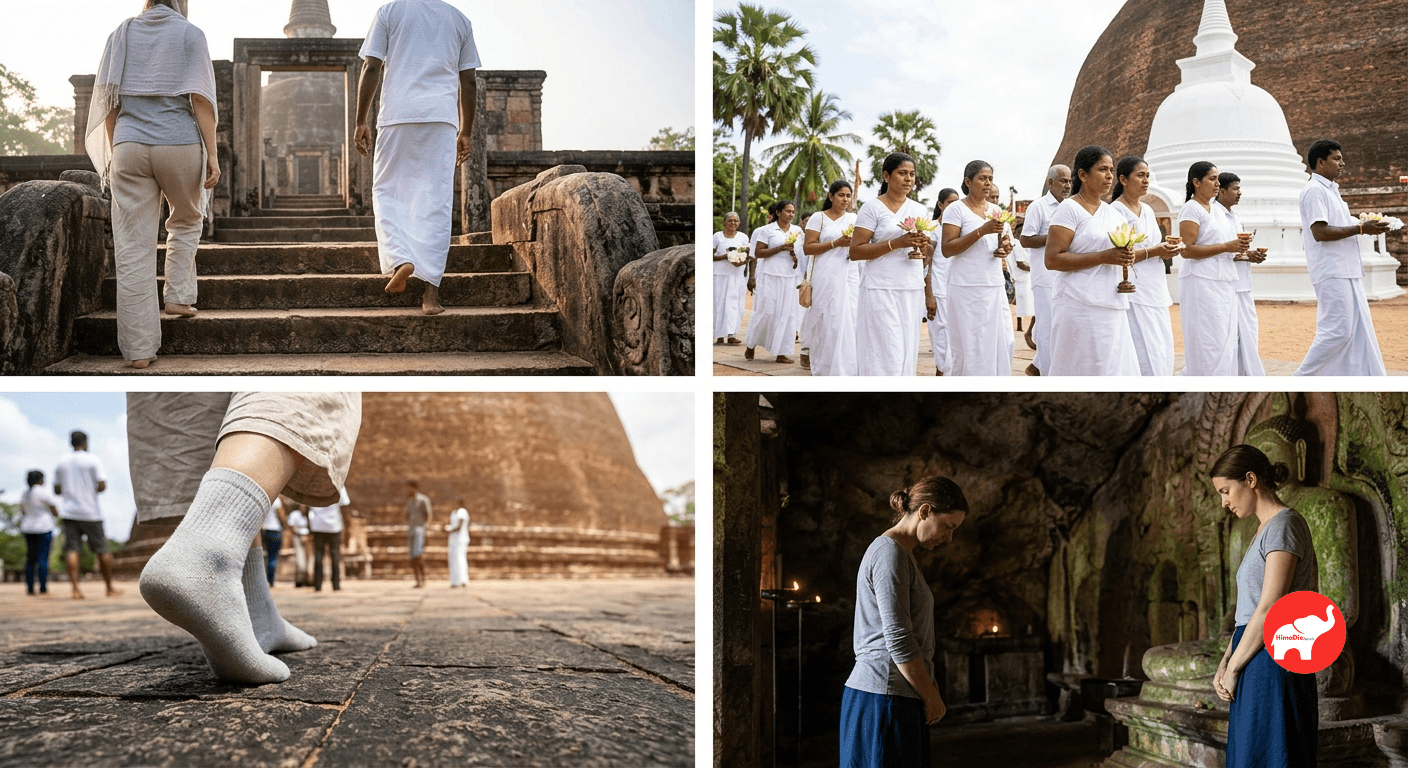
If you have ever stood before the towering brickwork of Jetavanaramaya in the quiet of the morning, or watched the light filter through the ancient caves at Dambulla, you know that Sri Lanka’s sacred spaces aren't just historical ruins. They are living, breathing sanctuaries where the devotion of thousands of years is still tangible in the air.
As a guide, my favorite part of the journey is helping travelers move past the role of a standard tourist and step into the role of a mindful storyteller. But to truly immerse yourself in these sacred spaces, you have to understand the language of respect. And in Sri Lanka, that language begins with what you wear.
Here is my personal, practical guide to temple attire—straight from the field—to help you pack smartly and tread lightly.
The Foundation: Covered Shoulders and Knees
In our culture, modesty is the ultimate sign of respect when entering a temple ground. The rules are straightforward, non-negotiable, and apply equally to everyone: your shoulders and your knees must be fully covered.
- The No-Go Zone: Tank tops, sleeveless blouses, shorts, and short dresses will mean you are turned away at the temple gates.
- The Subtle Detail: Be careful with long dresses or skirts that have high slits. If the slit rises above your knee when you walk, it can still be considered inappropriate by the temple guardians.
Gabriel’s Practical Tip: Always keep a lightweight, neutral sarong or a large linen scarf packed away in your camera bag. If we are exploring the island on a hot day and you’re wearing a t-shirt and shorts, you can easily wrap the sarong around your waist before we enter the sacred grounds. It’s effortless, breathable, and respects the space perfectly.

Why We Lean Toward White and Light Tones
Walk into any temple on a Poya (full moon) day, and you will see a breathtaking sea of local devotees dressed entirely in pure, crisp white.
In our tradition, white is a visual equalizer. It represents the shedding of the ego, humility, and inner purity. While I never expect my clients to have a suitcase full of white clothes, I always recommend choosing white, cream, or soft pastel tones for our temple days.
- Why it matters: It shows the local community that you aren't just visiting a site; you are honoring their way of life.
- The Material: Stick to loose, breathable cotton or linen. It keeps you cool in the tropical humidity while ensuring you stay fully covered. Avoid loud neon colors or shirts with heavy, aggressive graphics.

The Midday Reality: Hats, Shoes, and Hot Stones
Before we step onto the sand or the vast stone terraces surrounding a stupa, two things must come off: your headwear and your footwear.
- Hats and Sunglasses: Taking these off is a traditional sign of humility before the sacred space.
- Shoes: We will leave our shoes at the designated counter near the entrance.
Now, here is a very real insider tip that standard travel blogs won't tell you: The tropical midday sun.
By 11:00 AM, the dark granite pathways and sandy courtyards at ancient sites like Polonnaruwa turn into literal frying pans. Walking completely barefoot can quickly turn a peaceful spiritual experience into a painful test of endurance.
THE SOCK HACK
PROHIBITED: Shoes, sandals, flip-flops, slippers.PERMITTED: Thick, clean socks (highly recommended!)


The Insider Hack: While shoes are strictly forbidden, wearing socks is completely acceptable. I always tell my clients to keep a pair of thick, clean socks in their bag specifically for temple visits. They act as a heat shield against the blistering stone, letting you focus on the architecture and the atmosphere instead of the burning soles of your feet.
Moving with Intent: Beyond the Clothes
True respect isn't just about the fabric on your back; it’s about how you carry yourself inside the sanctuary.
- Never Turn Your Back on the Buddha:Framing your shots.
As someone who loves capturing the soul of an environment, I encourage photography, but etiquette is crucial. Never pose with your back turned to a Buddha statue for a photo or a selfie. Always face the image, or angle your body respectfully toward it within the frame.
- Conceal Religious Deities:Cultural Sensitivity.
If you have tattoos of the Buddha or Hindu deities—especially below the waist—they must be completely covered up with clothing or a wrap. In local culture, placing sacred imagery on the lower parts of the body is a major taboo.
- Keep a Quiet Presence:Slowing Down.
Lower your voice, put your phone on silent, and avoid public displays of affection. If we cross paths with monks or nuns, a gentle smile or placing your palms together at chest level (Ayubowan) is the perfect, silent nod of respect.
The Spirit of the Journey
At the end of the day, these guidelines aren't about restrictions; they are an invitation. They invite you to slow down, match the rhythm of our island, and participate in a tradition of mindfulness that has kept these sanctuaries beautiful for centuries.
When you dress with intention, you transition from being a simple spectator to a respectful guest. Pack smart, bring your thickest socks, and let's experience the profound stillness of Sri Lanka together.